



On May 21, announcing her response to the economic impact of the war in Iran, the Chancellor, Rachel Reeves, launched an initiative to encourage British people to enjoy 'stay at home' holidays this summer by cutting the costs of certain family activities.
She called it the Great British Summer Saving Scheme.
This is not the first time a UK Government has introduced a scheme to persuade people to holiday at home in response to national economic pressures resulting from war.
In the Second World War, the government launched a series of schemes to encourage holidaying at home.
Instead of boarding trains to the seaside, people were to enjoy local leisure events organised by borough councils.
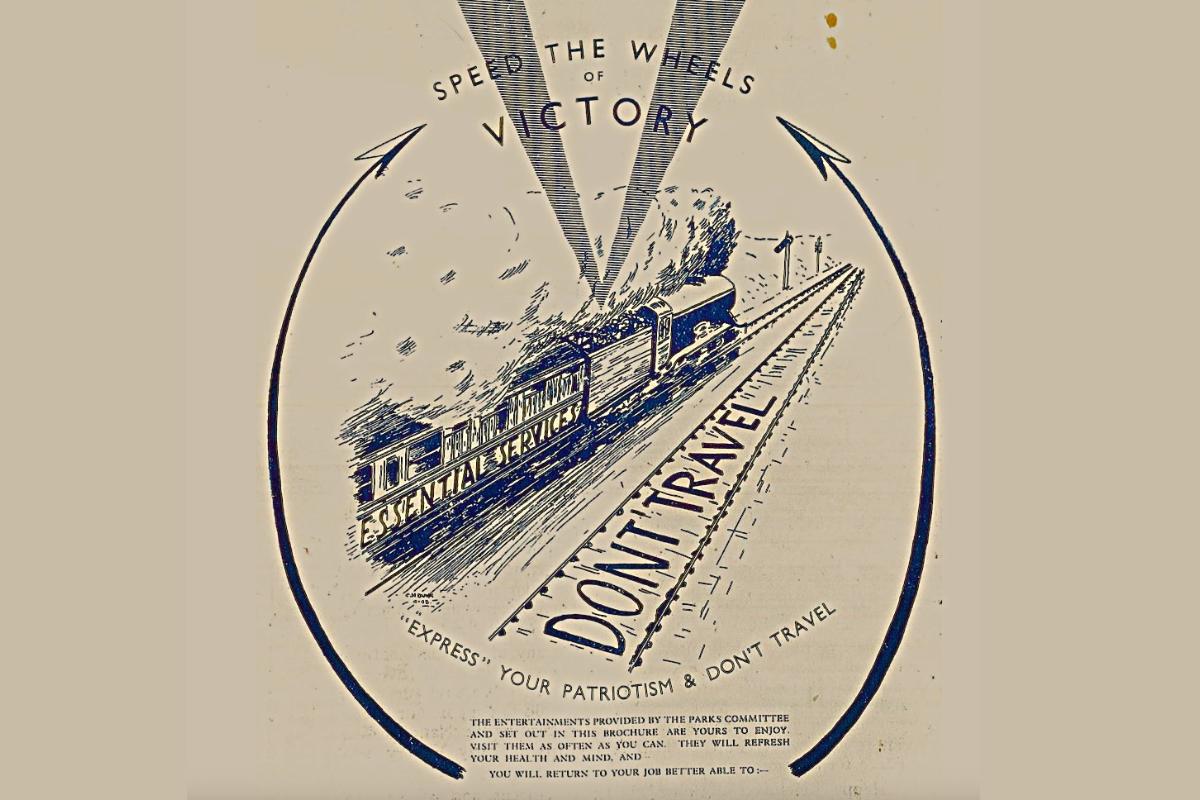
The goal was to relieve pressure on the nation’s rail networks, prioritise military freight and personnel, save fuel and maintain civilian morale.

Launched in 1942, Making the Best of Holidays was somewhat grudging: "Holidays this year," it began, "can only be justified if those who take them return fitter than before for their war jobs."
In 1944, London Transport issued a public announcement seeking to discourage travel: "Even in this fifth year of war, London Transport will do its best, but the services are primarily designed for those not on holiday."
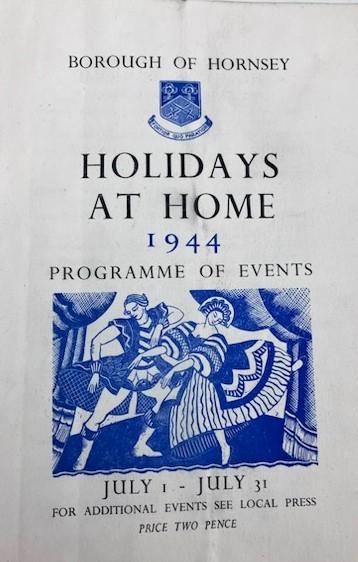
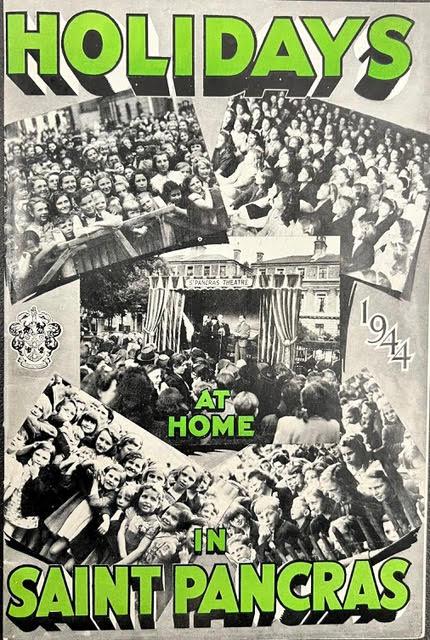
In 1944, both Hornsey and St Pancras boroughs rose to the challenge of organising hundreds of summer events for people to enjoy.
The Borough of Hornsey Holidays at Home Programme of Events, featuring on the cover an art deco design by the Hornsey School of Art, listed entertainments available on every day of the month of July.
These included exhibition tennis, cricket, bowls and boxing matches; splash nights at the Park Road swimming pool, one featuring soldiers in full battle kit.
There were no less than 13 concerts; the new open-air theatre in Finsbury Park had performances every weekday; there was weekly open-air dancing in Priory Park, as well as inside in the Town Hall, one of which was to be organised by the Communist Party.
At Alexandra Palace there were performances by military bands, boating on the lake, putting, and Punch and Judy shows; there were two garden fêtes; an open-air pianoforte recital in Grove Lodge, Muswell Hill, and a marching display by the Boys Brigade.
The programme also reminded readers of the other facilities regularly available in the borough: evening classes, the Hornsey Libraries.
The School of Art, which offered instruction in all branches of fine and applied art: "Every person can be a craftsman and most have potential qualities of aesthetic appreciation. Employ your leisure in cultural and vocational pursuits."
The Hornsey Local Youth Committee appealed to young people to become involved with the borough’s 50 youth groups in language that not appropriate today: "To all young people who wish to be gay and play, to be serious and study, we recommend you to contact the Youth Officer."

The Hornsey Journal’s correspondent reported that the Holidays-at-Home Committee had made residents conscious of Hornsey as a holiday resort and that the warm weather on the first weekend of the programme saw the people of Hornsey making full use of the facilities provided, with thousands flocking to the fête in Priory Park, "truly a children’s paradise!"
But the paper warned: "We at home should under no circumstances allow selfish desires for sea breezes to imperil the safety of the armies that are about to invade the Nazi-dominated continent. The war effort must come first."
Dancing was a feature of virtually all Holidays at Home wartime programmes.
Social historian Chris Sladen quotes Norman Longmate in his book How We Lived Then as seeing the provision of open-air dancing as marking a real social change.
Longmate recalled: "Before the war the idea of British people enjoying themselves in the open air had always seemed particularly shocking to puritans, but now to dance in the parks on a summer evening became not merely respectable, but actually patriotic."
This July and August, 82 years on, VAT is reduced to 5% on family leisure activities, theme parks, zoos, soft play areas, and also on children’s menus in restaurants and cafés.
How many people will be attracted by these savings to 'holiday at home' this summer? But where are the dances?
- Walter Merricks is chair of the Hornsey Historical Society which always welcomes new members (hornseyhistorical.org.uk/membership).


Share