



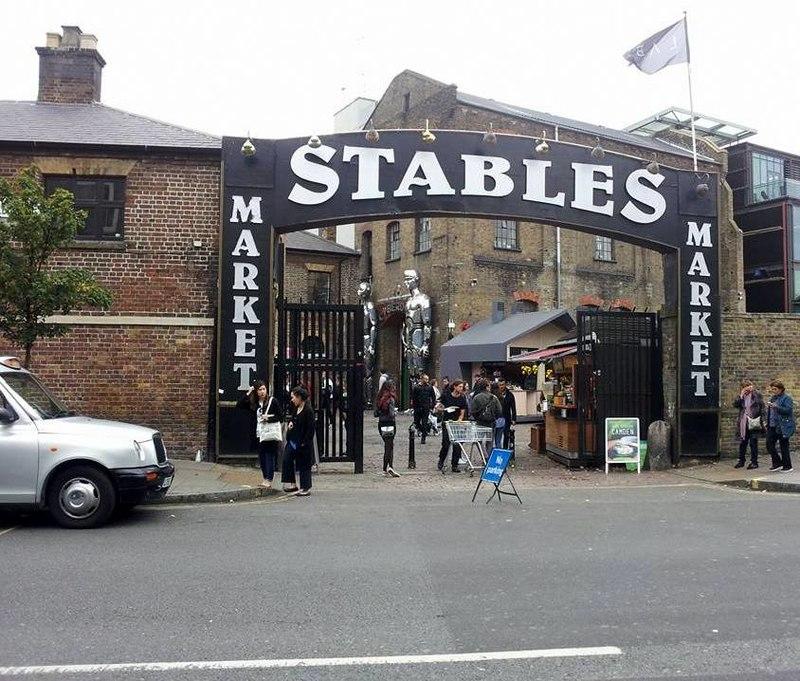


Today visitors come from all over the world to Camden Town to eat from the array of food stalls and buy vintage clothes and jewellery in its markets.
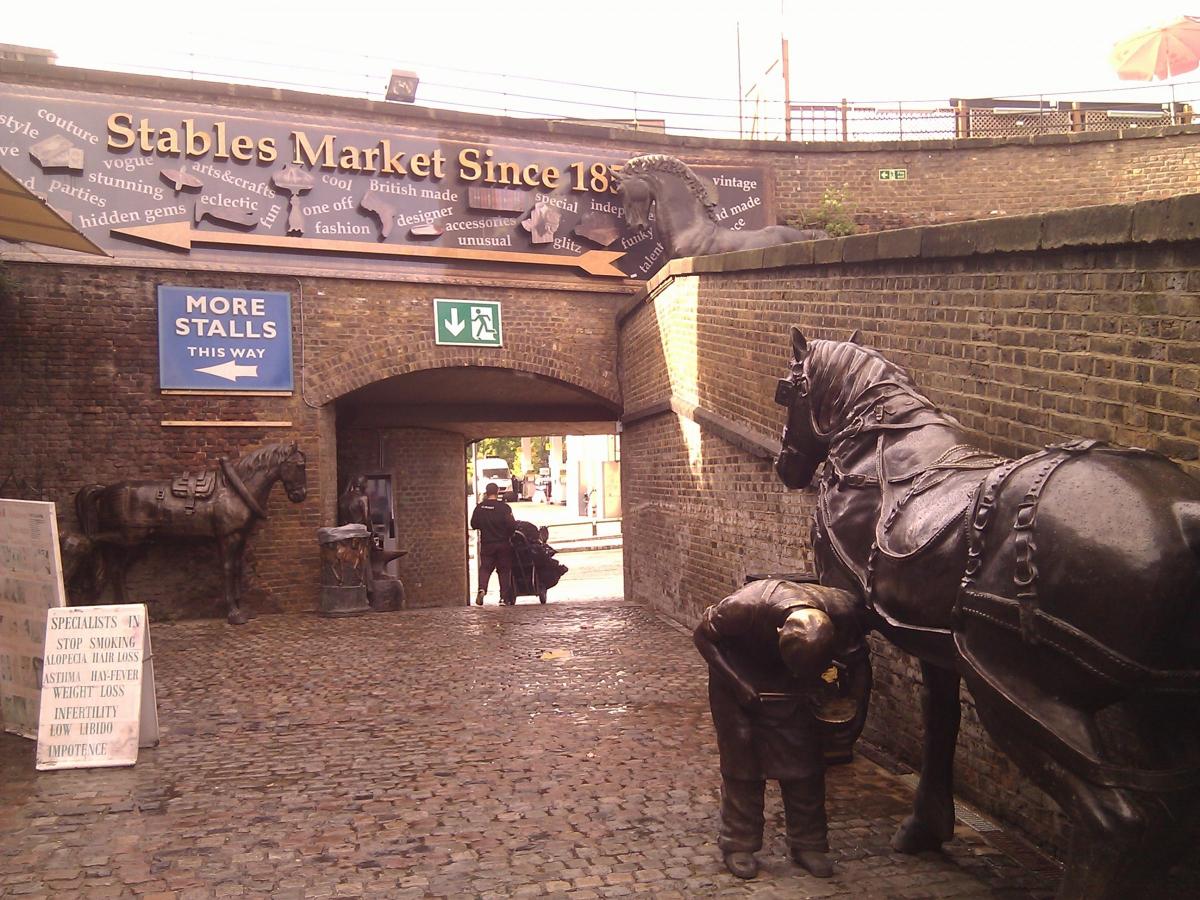
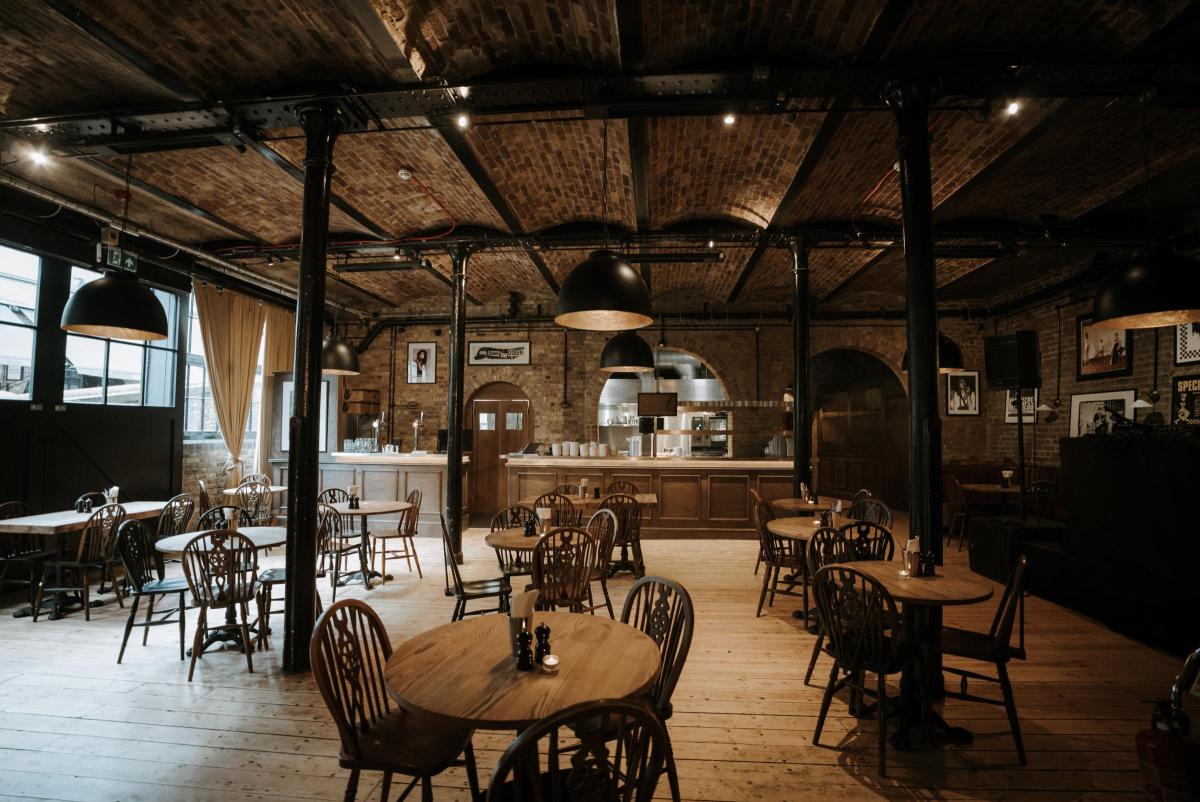
But sup a pint in The Dark Horse pub or climb the ramp to the upper terrace, and you are walking in the hoofprints of the heavy horses who kept this former transport hub moving 150 years ago.
In Lost London (Yale University Press) Paul Knox offers a history of the capital in "25 missing buildings".

He explains how growing up he saw bomb sites left by the London Blitz being filled in by new structures.
Paul wrote: "I have learnt to see buildings, old new or lost, in context of successive phases of growth or change.
"All are products of the prevailing political economy and all become living histories. Together their stories add up to the history of an entire city."
The horse stables of Camden Town were part of a transport network of railway sidings, goods yards and canals linking London's docklands with the Midlands and the North.
The Victorian canal, road, and rail routes intersected here with each depending on heavy horses to pull barges, manoeuvre railway engines, and haul cartloads of goods.

The goods yards, stables and warehouses sprung up in the 1840s and lasted until the 1960s.
In the early days The London and Birmingham Railway originally terminated in Camden where it owned a 25-acre goods yard just north of the Regent's Canal.
When it started to take passengers it had to run the line into the centre of London to Euston, becoming the London and North Western Railway.

That left space in Camden Town for a warren of tunnels, yards, sidings and engine repair sheds. In 1846 there was stabling for 168 horses in four stables in vaults beneath the sidings.
Charles Dickens himself wrote about a fire in 1857 at a stables run by haulage firm Pickfords - they were rebuilt with space for 300 horses.
Alongside the stables were workshops for cart and harness repair, a forge and feed stores.
More stabling for 150 horses was added in Gloucester Avenue as horses were needed to pull brewery drays, builders carts, and the Omnibus.
By the end of the century there were also loads of gin from W A Gilbey's bonded warehouses being shipped all over the country.
Horse tunnels connected the sidings and wharves with the stables and one stable block was transformed into a 'horse hospital' to care for exhausted or injured animals.
As they ran out of space several were built with a second floor and a ramp.
The horses' hooves had special shoes that helped them grip on the ramps if it was slippery or they were pulling a heavy load.
But as the engine replaced horse power the stables emptied out and by the 1960s the old buildings were being demolished. The run down streets of abandoned buildings were the setting for the finale of John Le Carre's Tinker Tailor Soldier Spy (1974).
The area was becoming gentrified. A former engine shed became The Roundhouse music venue with Pink Floyd playing an early gig in 1966. Punk acts like The Clash were drawn to the area's pubs and clubs.
And a local collective started a market in the old timber yard by the canal. Camden Market opened in 1974 with just 16 stalls.
Soon the High Street was part of a sprawling celebration of youth culture, clothing, music, art and creativity.
The former horse hospital became an art gallery, bar and performance space frequented by the likes of Amy Winehouse while downstairs there's The Dark Horse pub and restaurants.
In recent years there has been the development of Hawley Wharf, and a greater commercialisation of a once counter cultural site with millions now visiting Camden's markets every year.
But as you walk along the cobblestones of Stables Market you can imagine a time when the tunnels, ramps and alleyways were full of working horses.


Share